
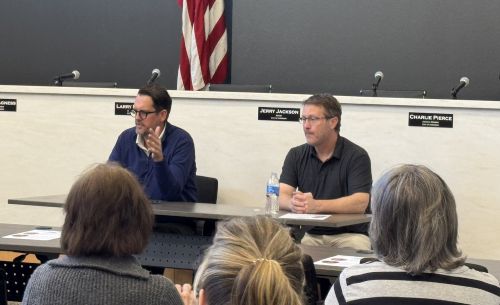
 Photo courtesy of: KARK-TV - Little Rock, AR.
State legislators recently heard testimony from farmers struggling with the financial impact of Act 373, also known as the "Generating Arkansas Jobs Act". The law, sponsored by former Senator Dismang, allows utility companies to charge ratepayers upfront for the construction of power generation facilities. Traditionally, these costs were only applied to bills after the power was actually flowing.
During the hearing, several farmers described how these upfront charges have severely strained their livelihoods. One farmer reported an unexpected increase of nearly $25,000 over three months, while another shared a monthly bill that jumped from roughly $3,200 to $6,000 after fees. Some producers have even changed their crops to offset the rising costs, yet they still face bills that threaten their business viability.
Senator McKee defended the legislation, explaining that the shift was necessary because two coal plants are closing following a legal settlement with the Sierra Club. He argued that "stair-stepping" the price increases now prevents a much larger, more sudden spike in the future.
However, the impact appears uneven. The Arkansas Electric Cooperatives (AECI) stated they have chosen not to use the Act's provisions, relying instead on established tariffs to manage costs. Meanwhile, Entergy testified that using the rider will save ratepayers $200 million compared to traditional recovery methods. Entergy representatives further argued that their rates have risen slower than inflation and provide a more stable long-term approach.
Despite these explanations, the farmers remained skeptical. They argued that while trillion-dollar tech companies and utility providers can recoup their investments, small-scale agricultural operations cannot. For many in the farming community, the "Generating Arkansas Jobs Act" feels less like a job creator and more like a financial burden that could push them out of business.
Share this article...

Copyright ©
North Arkansas Performing Artists Coalition (NAPAC) / The Harrison Post